
Patterns in Iznik Tiles

Iznik tiles often feature a blend of floral, geometric, and calligraphic motifs. These reflect a mix of Ottoman aesthetics, symbolism of nature and Islamic spirituality. Typical Patterns:
Floral Motifs: First of all floral motifs were reflecting nature especially heavenly garden. Roses associated with the Prophet Muhammad and spiritual love. Carnations and hyacinths evoke a paradise. Tulips are symbol of divine beauty. It is generally accepted that tulips are used in Islamic art to represent Allah because "Allah" and "Lale" carry the same letters of the. Therefore, tulips must have been used as a flower representing Allah in tile art as well. However, artists have created a tulip repertoire that exceeds the meaning of the figure by designing dozens of different types of tulips. Spring branches are another frequently used pattern. Blossoming branches and buds are depicted.
Çintemani Motif: It is a motif consisting of 3 circles and accompanying curved lines. However, it also has various versions enriched with other motifs. Although 3 circles are associated with Buddhism, it is known that this motif gained a meaning representing power in Ottoman art. The motif, which is especially seen on the clothing of sultans, represents the patterns on the furs of animals such as leopards and pars and therefore the power of the ruler. Versions of this motif were also used on Iznik tiles.
Geometric and Symmetrical Design: This expression describes not only a pattern but also a method of creating patterns. Abstract patterns are produced by stylizing plant-based motifs. Then these patterns create the surfaces are created through the principle of repetition. In other words, repetition and rhythm are typical methods for Iznik tile patterns.
Calligraphy: Quranic verses were used on the tiles of mosques and tombs.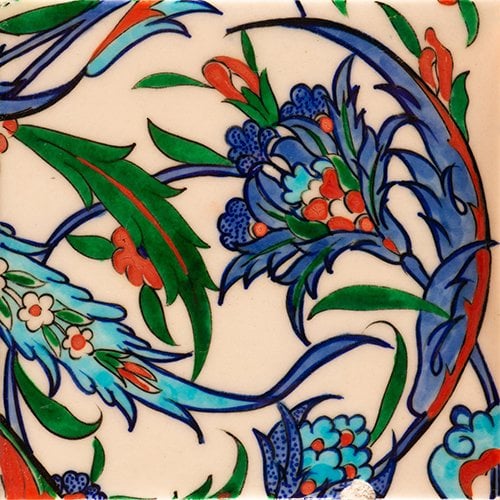
Floral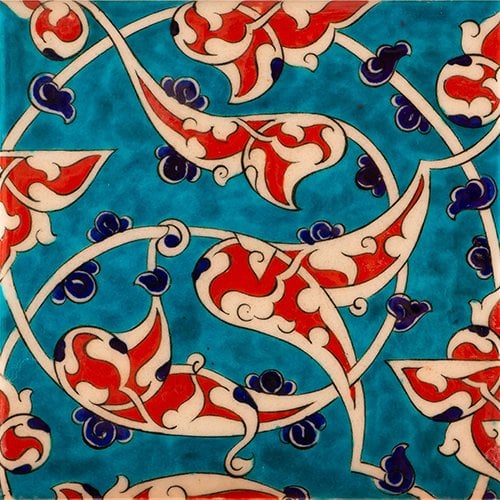
Rumi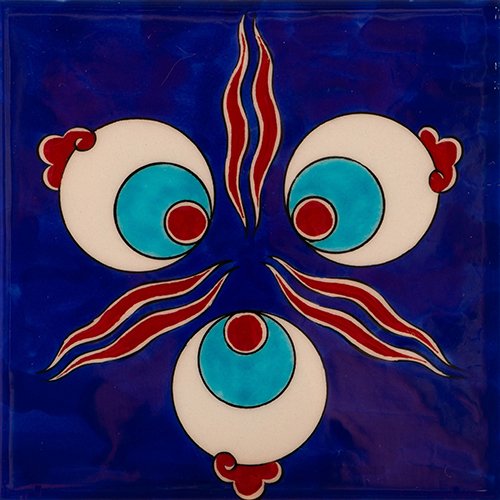
Cintamani
Geometric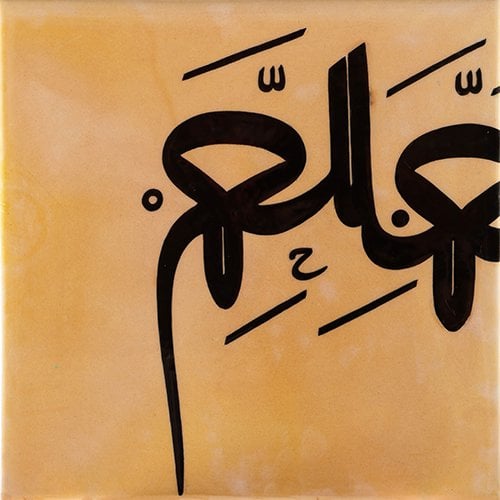
Calligraphy